The body / wearable
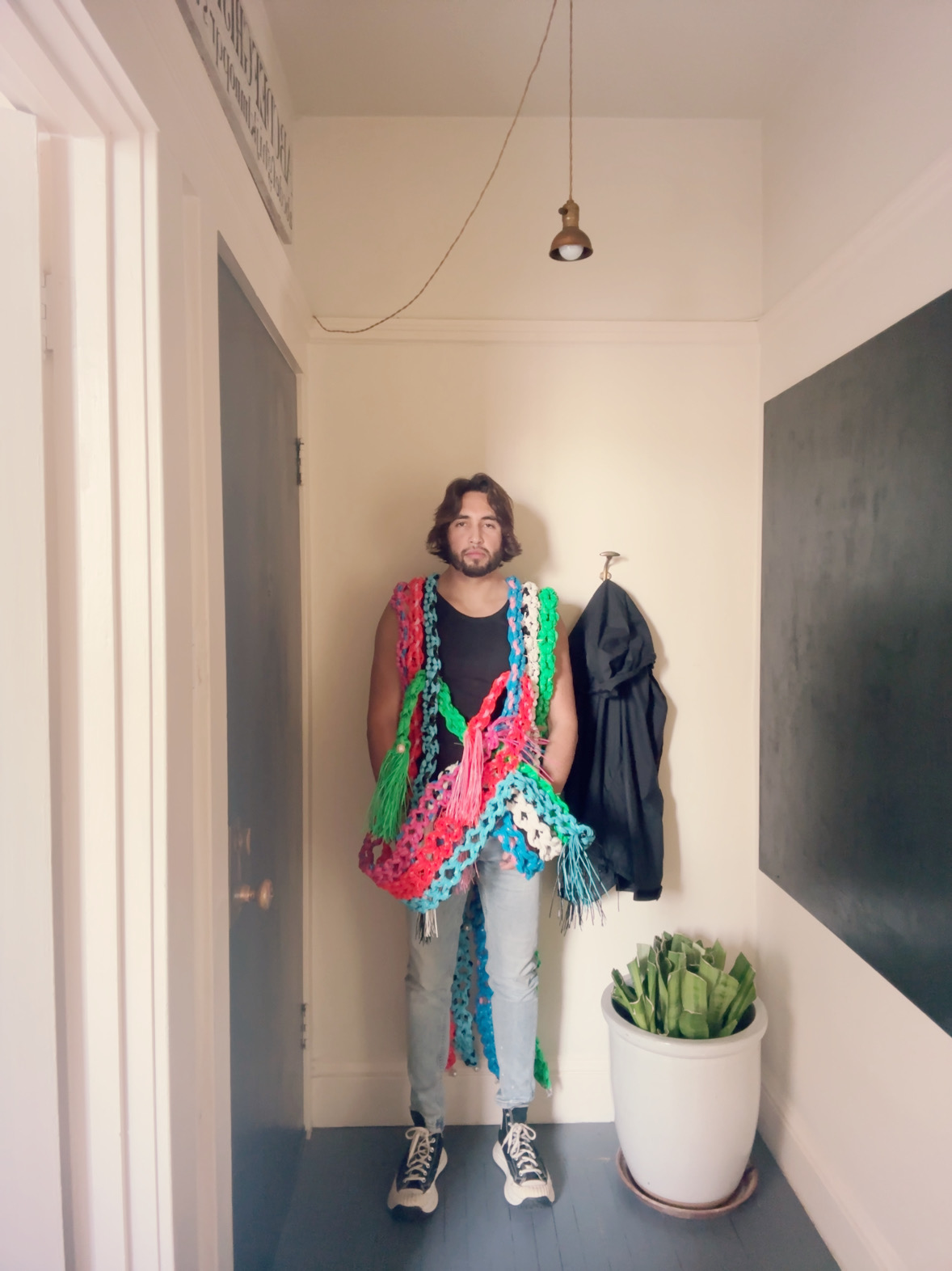
A wearable sculpture that moves between wall, stair, tabletop, floor and body. Its arrangement is never entirely settled.
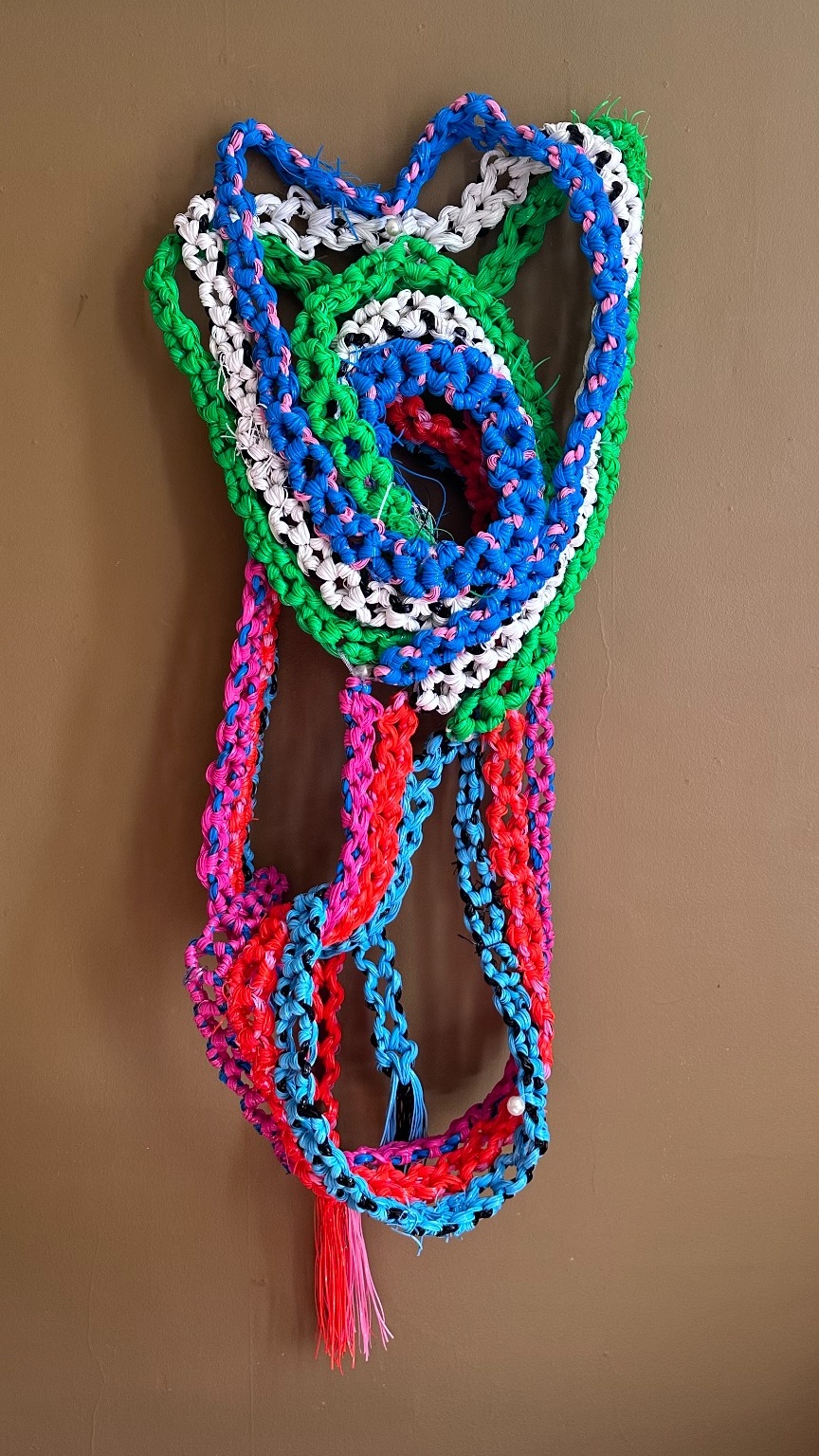 01 / Suspended
Beginning in fashion and the imagery of Bolivia's Diablada, Muda is constructed from lengths of hand-wrapped plastic. Connected and rearranged, its forms can be read as a sculpture, an object for the home, or something to wear. Each placement reveals a different possibility.
Move between seven arrangements and a material detail. The views document the sculpture in its different arrangements.
Gathered and suspended, the plastic lengths appear to settle into a fixed sculptural form. The arrangement can change again.
Use the arrows or select a photograph below
These photographs document the work in different spaces and arrangements.
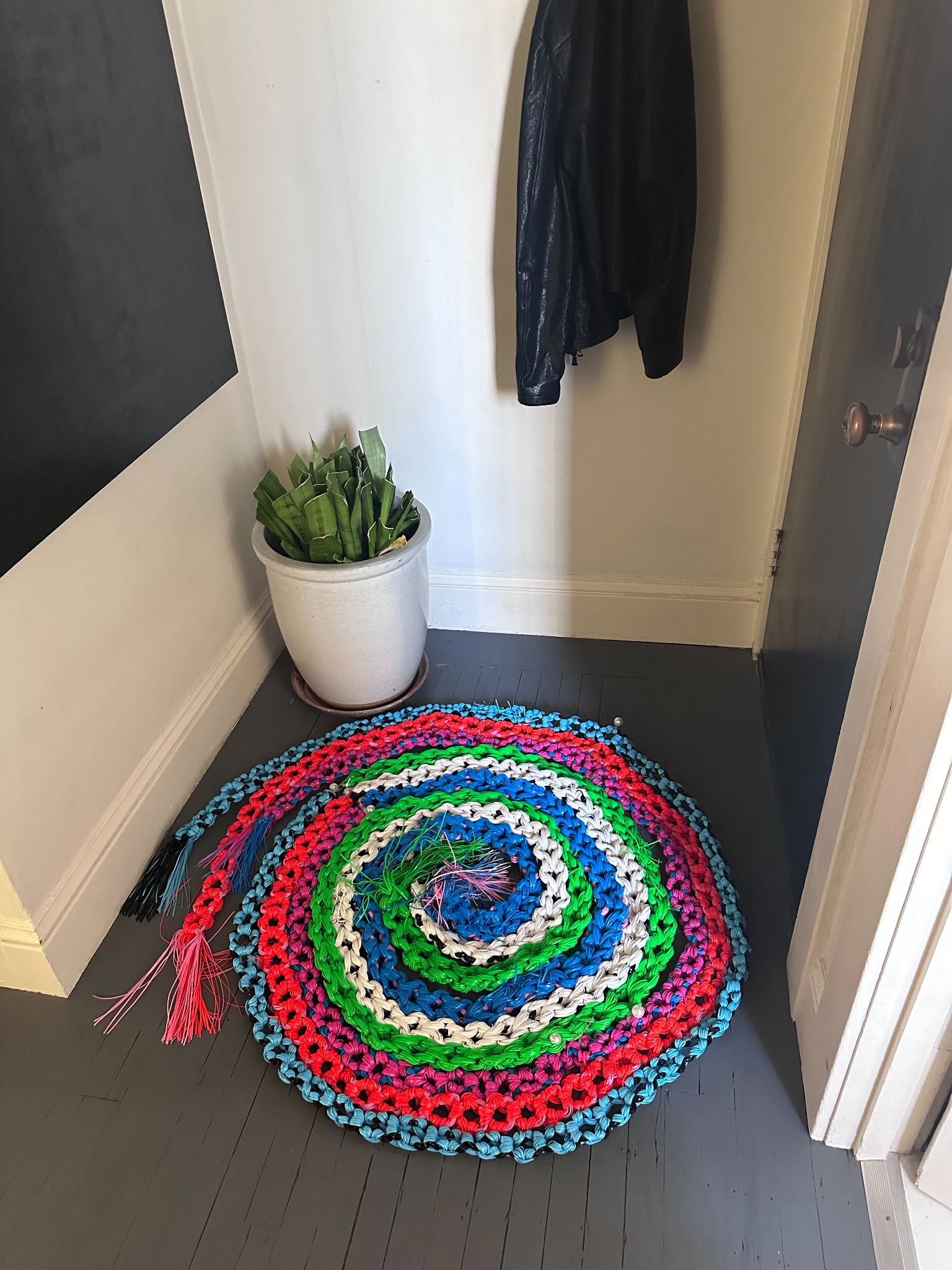
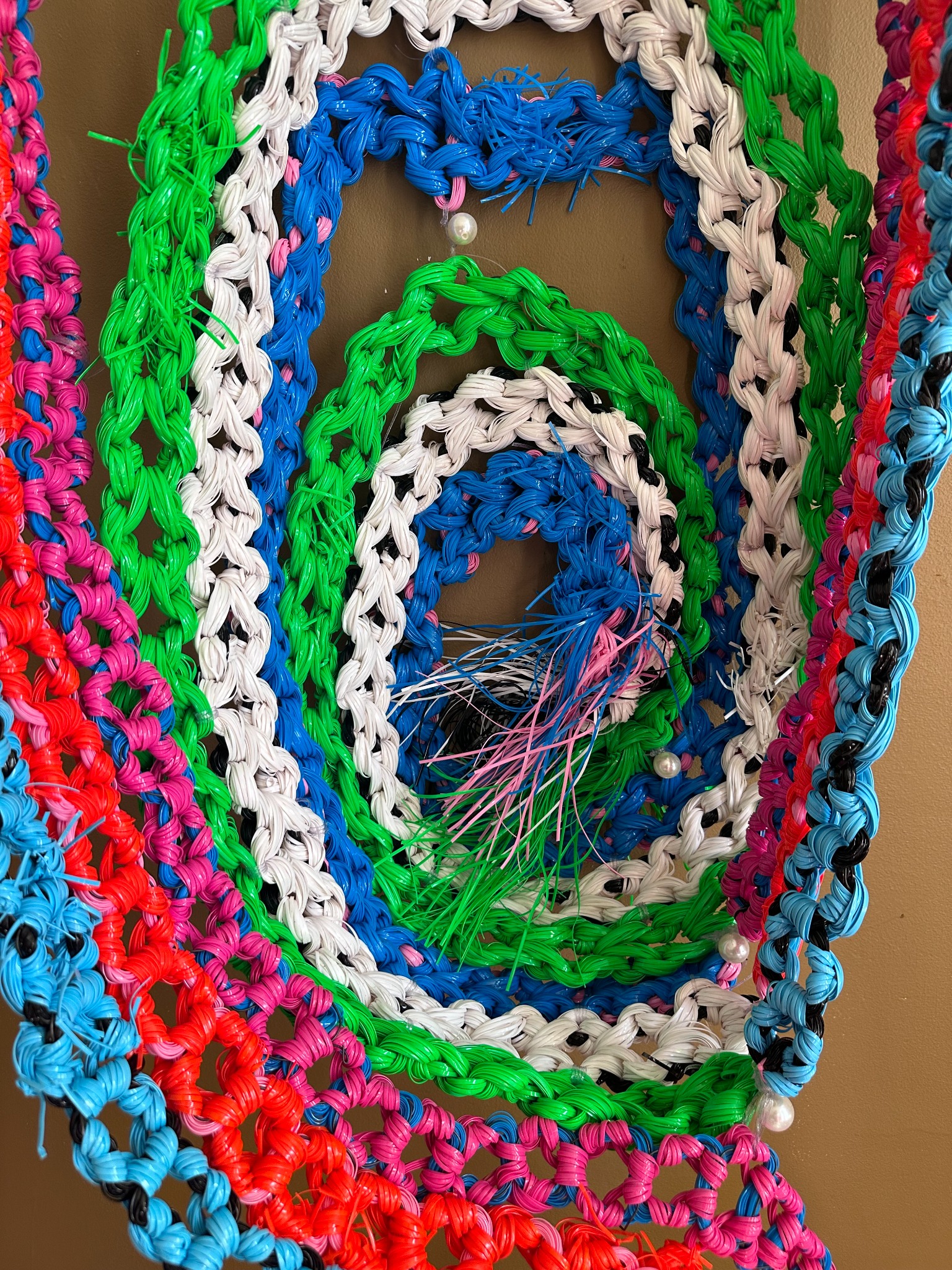
Wrapping plastic around plastic creates a softness that recalls the touch of snakeskin. The coils can evoke a nest—an echo of the snake imagery that informed the original Diablada-inspired garments.
The intended experience is participatory: viewers could handle, rearrange and experiment with the object, discovering new forms rather than accepting a single permanent display. That invitation is an artistic aim; the photographs here document the artist's own arrangements.